 Incontinence Direct
Supportive Care Guidance
Incontinence Direct
Incontinence is one of the silent health issues — often hidden far longer than it needs to be. Here you'll find a calm, human approach to understanding your options and moving forward with dignity.

Some health issues are freely and openly discussed. Others are hidden far longer than they should be. Incontinence is one of the silent ones. It can influence the way you schedule your day, your self-assurance when stepping outside your door, the rhythm of movement that fills ordinary moments — whether quick or mundane — and even how much mental energy you have left by the end of the day from thinking so far ahead.
For some, it starts with something small. It can be just drops when coughing or laughing. An urgency that comes too soon. A quiet awareness that you check where the nearest toilet is before you walk out of the door. At first it may appear as a small adjustment in the way you live, but slowly it can change everything. It shifts your mindset. It might draw out a little of the introversion in you. It can make you feel older than yourself, or less comfortable in your skin than you once were.
This is exactly why incontinence deserves proper recognition. Not embarrassment. Not judgement. Not advice given in a hurry, or the result of an awkward conversation that leaves you feeling more isolated than before. It should be a considerate, non-confrontational and constructive form of care. That is the approach taken here.
This is a thoughtful resource for people looking to understand where their options lie. For those seeking a non-surgical solution that feels contemporary, unobtrusive, and functional. It is built with the men and women in mind who, without major life disruption or invasive procedures, simply want to feel more in control again and get back to enjoying their lives.
The aim is to offer people living with incontinence concerns something that feels less like an obstacle and more like a reassuring way forward. It is for those who would prefer a gentler, less invasive path toward improving their symptoms, rather than immediately considering a more aggressive route.
The focus includes stress incontinence, urge incontinence, mixed incontinence, overactive bladder symptoms and bowel control concerns. These issues can arise for different reasons and at different stages of life. Sometimes they appear after childbirth. They can start alongside age-related changes. They may accompany prostate concerns in men. In some cases they develop gradually, and in others they become more noticeable quite suddenly. Whatever the reason, the experience can feel personal and wearing.
This is a carefully considered way of thinking about care, not a sweeping generalisation. It is a support path based on awareness of what your reality actually looks like. That means accepting that the situation is uncomfortable and inconvenient, and that it also carries an emotional weight. It means offering treatment that works with the body, rather than against it. It means giving you the opportunity to feel understood instead of rushed.
It also recognises that not everyone wants to travel far, and many prefer a quieter setting than others. That is why accessible, nationwide clinic support matters. It makes care more reachable. It reduces pressure. It helps connect you with something close to where you are, and that sense of proximity alone can lessen the burden of taking the first step. For some, flexibility through home-based options can be equally valuable — because the easier something fits into life, the more likely it is to truly become part of a care journey.

Incontinence is only half the story in physical terms. The emotional side often carries equal weight, and it can be even harder to put into words. Many people describe feelings of embarrassment, frustration or quiet self-consciousness. Some begin to withdraw socially. Others become very controlling about where they go and what they do. There can be a quiet, difficult sense that life is being managed around a problem rather than lived freely.
Confidence is a huge factor in overall wellbeing. A feeling of safety in our own bodies allows people to move through life differently. They wear the clothes they like. They laugh without hesitation. They say yes to plans. They feel more at home in their own skin. When incontinence disrupts that sense of comfort, support must do more than address symptoms alone. It should also help restore confidence.
This is part of the reasoning behind a discreet and reassuring approach. People facing personal challenges seek safety, not scrutiny. They want clarity, not unnecessary technical detail. They want clear explanations of what is going on and what can be done. They want to know that their situation is not unique, not shameful, and not beyond help. A thoughtful treatment experience can do a great deal. It can ease some of the pressure around the problem. It can restore a sense of control. It can shift the experience from one of worry to one of steady, dependable progress. Very often, that change feels as valuable as the physical improvement itself.
Everyone experiences things differently, but many of the concerns people come with share common threads. Recognising your type of incontinence is often the first step toward clearer, more comfortable care.
Commonly noticed during activity or increased pressure. Leakage can occur from a cough, laugh, sneeze, jump or exercise. It can be especially frustrating for someone who is otherwise active and healthy, because it affects moments that are supposed to feel carefree.
A sudden and strong need to go, sometimes with very little warning. It can create a sense of always watching the clock, searching for a toilet, or being interrupted at any moment. Over time this alertness can feel quite wearing.
A combination of more than one type. This can make things feel trickier to manage, because symptoms are less predictable and often show up in several different ways at different moments in the day.
The feeling of going to the toilet far more often than usual, even when the bladder does not feel especially full. It can make the day feel divided into small segments and can quietly drain energy over time.
A very private concern that can affect confidence and social comfort. It may not be openly talked about, but it certainly deserves the same careful attention and respectful support as any other form of incontinence.
Pelvic floor changes after childbirth can affect control in unexpected ways. Gentle, structured support can be especially helpful during this stage, helping the body regain strength and balance steadily over time.
Remember: these symptoms are not a sign that something is wrong with you as a person. They are signs that your body might need a little assistance. With the right support, real improvement is possible.
Many people have heard the term “pelvic floor,” but fewer feel confident explaining what it means in practical terms. The pelvic floor is a set of muscles located at the base of the pelvis. It plays a large role in retaining control, as these muscles support both the bladder and bowel.
When these muscles are strong and coordinated, they do their job quietly. You hardly think about them. They support the body in the background. But when they become weaker or less responsive, you might notice leakage, urgency, or a reduced sense of control.
There are a number of reasons this can happen. Childbirth. Natural ageing. Hormonal changes. Surgery. Shifts in overall muscle tone. A period of reduced activity. Sometimes more than one factor applies at once. Pelvic floor exercises are well known to be beneficial, but not everyone finds them easy to do consistently or correctly. Some people are unsure they are engaging the right muscles. Others struggle to stay with the exercises long-term.
This is where a newer, more guided form of support steps in. Rather than relying on guesswork, it uses structured electromagnetic stimulation to engage the pelvic floor muscles in a carefully measured way. This helps the muscles contract and relax in a pattern that is more organised, specific and controllable than most people can manage on their own. The concept is straightforward, but the results can be meaningful. Better muscle function can lead to better control. Better control can reduce worry. Reduced worry can restore confidence. And as confidence returns, so does the feeling of everyday ease.
One of the major non-invasive approaches available today is what is known as Electromagnetic Seat treatment, or EMS. It works by directing electromagnetic energy to the muscles involved in bladder and bowel control. This triggers repeated, structured muscle contractions that help build strength and function over time.
Why does this matter? Because one of the largest contributors to incontinence symptoms is pelvic floor weakness. When these muscles are not firing well, control begins to slip. EMS treatment offers a practical, non-invasive way to help restore it.
The experience appeals to many because it is straightforward. There is no surgery. There are no needles. There is no recovery period. You remain fully clothed, sitting comfortably, while the treatment does its work below the surface. It is small, quiet and designed to blend into the background of everyday life. Part of the value of the treatment is that it does not depend so heavily on getting it "right" the way guided exercises sometimes do. It helps remove the guesswork. For many people who have tried pelvic floor exercises on their own and found them confusing or inconsistent, this comes as a real relief.
Of course, no treatment is a miracle, and results will vary from person to person. But many people appreciate having a modern alternative that still feels practical and gentle. It brings that choice into an environment that feels calm and encouraging.
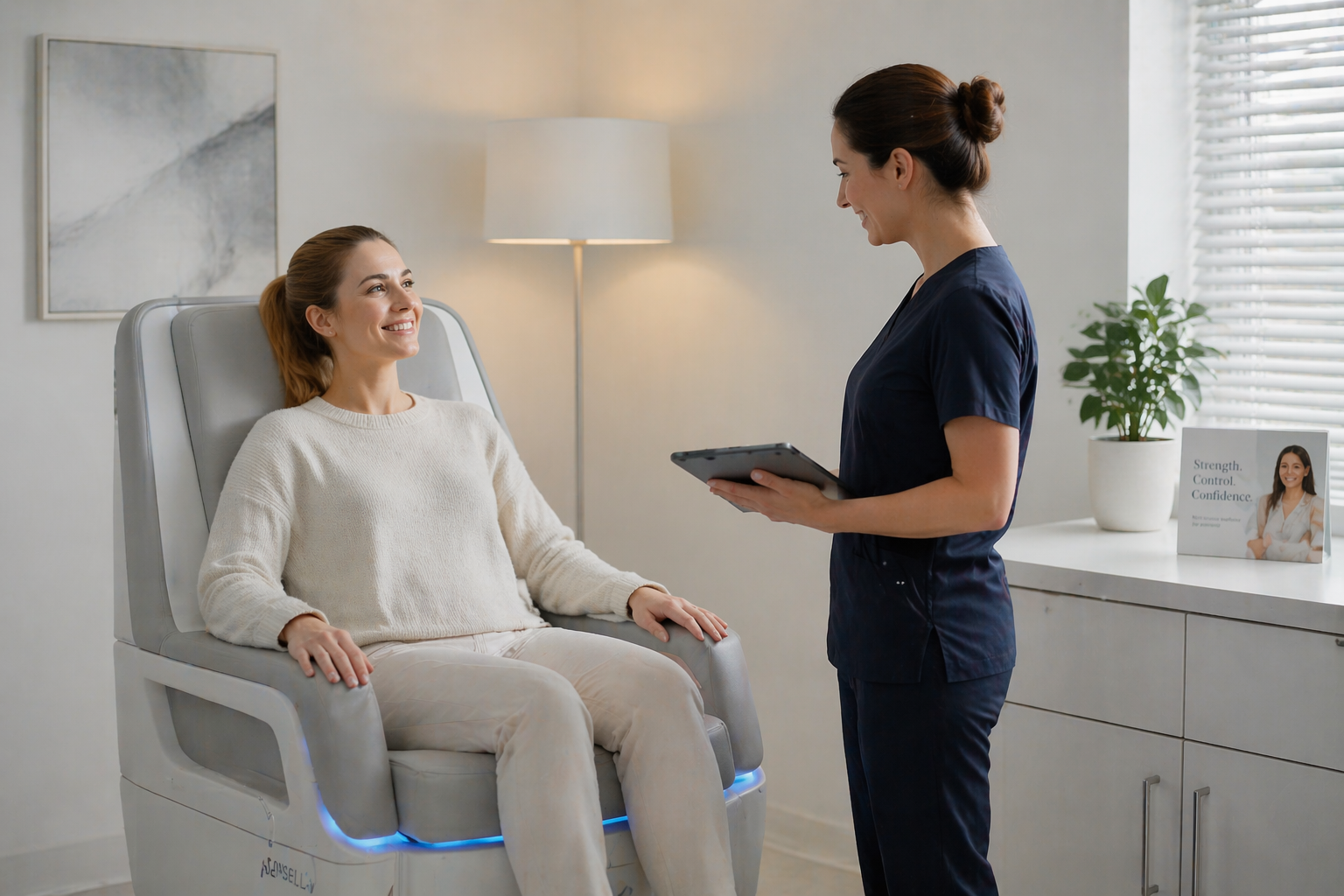
One of the most understandable reasons people hesitate to ask for help with incontinence is fear of the unknown. Possible discomfort, embarrassment, or a time-consuming procedure. When something feels private and personal, simply facing it can feel larger than the subject itself. The goal here is to reduce that worry rather than add to it.
There is no need to overcomplicate preparation. No invasive procedures are required. You are seated comfortably, fully clothed, and the treatment is delivered gently and precisely. It is designed to be private, practical and low-disruption, so it fits into an ordinary day. During a session, you might feel gentle muscle contractions in the pelvic area. This sensation is often described as unfamiliar at first, but entirely manageable. It is part of how the treatment works, and most people adjust to it quickly.
One of the best parts is that there is no downtime afterward, so you can return to your normal routine. That matters. Life is busy. It is not always easy for people to plan additional arrangements around treatment, especially when the concern has already quietly impacted their lives. Sustainable care is care that easily merges with life.
This approach suits people seeking a gentle, practical companion through their care journey — those who prefer not to step into an overwhelming medical process. It may also appeal to people who want to understand their options more clearly, those considering a newer treatment modality, and anyone who values privacy in how their care is delivered.
It can be especially beneficial for women after childbirth, when pelvic floor changes can affect control in unanticipated ways. It may also be useful for women experiencing hormonal shifts related to age, or other changes that influence bladder comfort.
It is equally helpful for men, particularly those experiencing the effects of prostate concerns or an age-related decline in muscle strength. Incontinence is sometimes spoken about as though it only affects one group, but the reality is broader and more varied than that.
It can also be a good fit for people who have been quietly managing on their own for some time. Many endure in silence for years before seeking help. When they finally do, they rarely want to feel they are putting their whole life on hold — especially when it has already meant planning so much around the concern. A path that is non-invasive, transparent and manageable can feel very appealing.
Convenience plays a larger role in health decisions than many people admit. When access feels difficult, care can remain on a to-do list for far too long. Travel time, scheduling pressure and unfamiliar surroundings can all become reasons to postpone.
A nationwide clinic model makes support easier and less cumbersome. For someone already cautious about their situation, the simple convenience of not having to travel far can make a real difference. Having a clinic nearby can ease a difficult decision. It can soften that feeling of needing to plan an entire day around a single appointment. It can make follow-up simpler. For many, this is the quiet sense of practical ease that finally allows them to take the first step. They don't need a complicated journey — they need a simple one.
A clinic-based routine isn't right for everyone all the time. Some people balance busy households. Others prefer the quiet of home. Some have mobility considerations or full schedules. Others simply find it easier to weave care into the rhythm of daily life. Home-based options can be especially helpful in these cases. The aim is not a one-size-fits-all path, but a range of genuine options that can wrap around the individual rather than the other way around. Flexibility may look small, but it often makes the difference between treatment that fits and treatment that falls away.
When people say they need help, what they often really mean is that they want help without disclosure. Without awkwardness. Without feeling as though their most private concern has been put on display. It is a simple, understandable wish.
Incontinence care is one area where discretion is not a small consideration. It shapes the entire experience. When someone is already carrying embarrassment, frustration or anxiety, the tone of support must be considered carefully from the very start. The treatment experience is intended to feel calm and dignified. Things should be explained in language that is clear, not clinical for the sake of it. The process should feel private. The environment should feel composed. The overall tone should remind people, quietly, that this is something others ask for help with all the time.
That shift in tone matters. It lifts some of the emotional weight people carry before they even begin. It creates a more comfortable space for positive change, and it helps people stay engaged because they feel safe rather than judged. For many, that is the difference between turning away and taking the next step forward.

It is natural to want a clear result from any form of treatment. But the value of this kind of support is often quieter than expected, and many people notice it first in small things before they see it in bigger ones.
At first, it may simply be reassurance — the feeling of doing something constructive. Then, across sessions and time, certain situations start to feel easier. Perhaps the urgency isn't quite so overwhelming. Perhaps leakage is less frequent. Perhaps toilets occupy less of your thinking than they used to. Perhaps "yes" starts to feel like a natural answer again.
These shifts can seem understated at first, yet they mean a great deal. For many people, incontinence doesn't arrive all at once — it shows up in small moments throughout the day. So when improvement begins, it tends to appear in those same small moments first. A cough that doesn't spiral into worry. A walk that feels a little lighter. A social event that requires less planning. That is part of the quiet strength of a structured, non-invasive approach. It isn't only about feeling stronger in the body. It is about trusting the body again in the moments that matter most.
Many people arrive with a similar set of thoughts. Some are practical. Some are emotional. Some simply come from wanting to know what's ahead.
Most often, the answer is no. You may feel muscle contractions, but the process should be painless and non-invasive.
No. It is a fully clothed, discreet treatment, which is part of what makes it so easy to approach.
Not typically. Everyday life can continue without much of a break, which is one of the reasons people find this type of support so manageable.
No. Incontinence can affect anyone, and the support reflects that. It is relevant across ages and stages of life.
Yes. Incontinence does not need to be dramatic to matter. If it is affecting your wellbeing, confidence or daily routine, it is worth taking seriously.
One of the reasons incontinence is so wearing is because it quietly makes ordinary life a little harder in the background. You still go to work. You still see friends. On the outside, everything looks in order. Yet somewhere inside, there is a constant low-level vigilance. An unspoken effort to stay in control. A need to orchestrate the day in ways others never have to.
That pressure of always being "on" is tiring. Good support is meant to ease that pressure, not add to it. The tone throughout is intentionally gentle. It isn't built around fear. It isn't built around shame. It rests on the principle that you deserve real, practical help that doesn't alienate you from the process of getting it.
That, in its own way, is a form of relief. Yes, relief from physical symptoms. But also from the mental weight of carrying something personal for too long. Relief from the belief that you must deal with this alone. Relief from the assumption that nothing better is available. Often, that quieter kind of relief is the first step — and for many, the most important one.

People sometimes feel they need to see a dramatic shift before anything counts. In reality, small changes can make life feel far more ordinary again when it comes to incontinence.
A little less urgency. A little more confidence when leaving the house. A little less worry in meetings or social settings. More freedom to exercise, travel, or laugh without holding back. A little less weight in your own body. These may seem modest on paper, but lived day-to-day, they are anything but small. They can mean the difference between quietly managing a problem and beginning to feel like yourself again. That is often the kind of change people hope for when they reach out — not a miraculous turnaround, but a gradual lift that makes life feel more open.
Confidence does not always return all at once. Sometimes it returns in stages. At first, it may simply be the relief of having a plan. Then it may be the comfort of knowing you are doing something worthwhile. Then, slowly, it may be the return of simple ease — going out without overthinking it, moving without background worry, laughing, travelling, resting.
Support for incontinence should make this possible. The guiding principle here is that this style of care should feel human, considered and accessible. It should not leave you feeling exposed. It should not cause you to shrink. It should help you understand your body, support it, and regain a sense of control over your own life.
Whether you are living with stress incontinence, urge symptoms, mixed conditions, overactive bladder or bowel control concerns, the experience is valid. The discomfort is real. And help should be offered in a place that feels steady and dignified. A modern, non-invasive approach can make a genuine difference. Structured pelvic floor support provides a practical way to help strengthen the muscles that hold everything together. Nationwide clinic access and home-based options make care more reachable. And the overall sense of a thoughtful, human experience can make what feels like a big step considerably lighter than many imagine.
When a private concern has been quietly carried for so long, the right kind of support can feel almost like freedom in itself. That is the spirit of everything shared here: straightforward, discreet, human understanding for a part of life that is very real.